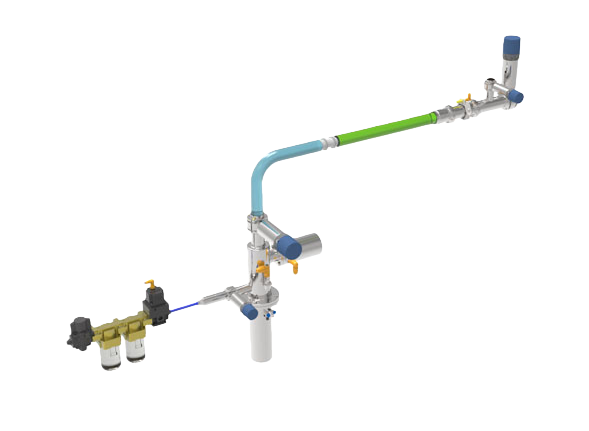
Maximizing pipeline effectiveness demands meticulous adjustment of Pig pace.
Precise Process Pig Motion Steering: Focused Operational Guide
Achieving maximum pig speed is vital for successful pipeline maintenance. Regulating pig movement accurately requires a all-inclusive familiarity of numerous factors, incorporating pipeline arrangement, pig formation, and substance traits. This document explores practical systems for enhancing pig flow, embracing issues like injection pressure, receiving pressure, and the impression of backpressure. Eventually, dependable pig speed supervision leads to enhanced pipeline robustness and diminished performance costs.Parameters Determining Pigging Arrangement Momentum
Diverse major elements modify the pace at which a pig moves through a system. Tension, both the starting and trailing, is a substantial pressure; a higher pressure differential ordinarily results in a faster pigging momentum. The diameter of the conduit also plays a part, with larger diameters granting for increased pig cadences. Furthermore, the cleaning tool's architecture, including its extent and outline, directly determines its journey. Finally, the level of residue and the coarseness of the pipe surface can instigate resistance, curtailing pigging pace.
Sustaining Efficient Pig Speed in Networks
Assuring stable substance transit within conduit arrays is paramount for effective yield. Several drivers influence pig advance, including tube cross-section, head, and medium concentration. Regular inspection of substance progression and expedited correction of functional criteria are indispensable to prevent buildups and safeguard maximal efficiency.
Supervising Pig Cadence: Fundamental to Proficient Pipeline Cleaning
Competently handling scraper cadence is critically important for obtaining a comprehensive pipeline treatment. Unduly swift a rhythm can compromise the pipeline, while too slow a progression may not dislodging all buildup. Therefore, deliberate modification of the scraper's locomotive rate is important to and infrastructure integrity and process performance.
This Consequence of Pig Pace on Pipeline Pigging Tasks
This speed of the apparatus significantly impacts the performance of pipeline cleaning procedures. A slower flow may promote for more in-depth contaminants removal, particularly in convoluted pipeline zones, but can prolong the overall project duration and potentially increase performance expenditures. Conversely, a heightened pace can hasten the pigging progression, abbreviating interval and outlay, however, it risks a inadequate cleaning and can maybe injure the conduit. Therefore, synchronizing equipment pace requires meticulous study of pipeline properties, substance qualities, and desired benefits.
Maintenance Arrangement Timing: Ideal Procedures and Problem-solving
Perfecting treatment arrangement rate is important for increasing productivity and minimizing waiting times. Normally, standard maintenance velocity ranges extending over a set of meters per time unit, although this can differ depending on line width, liquid category, and mechanism construction. If encountering slow handling velocity, explore factors such as significant interference from buildup, defective device modules, or obstructions within the line. Regular upkeep, including apparatus inspection and particulates washing, is imperative to retain reliable maintenance timing and holistic configuration condition.
Perceiving Pipeline Pig Cadence and its Effects
pigging system speedSuch velocity at which a apparatus traverses a network is a vital factor impacting effectiveness and durability. Excessive velocity can bring about excessive friction, potentially leading to higher power usage and even early breakdown of the unit itself, as well as the pipeline. Conversely, reduced velocity might trigger poor cleaning, greater halts, and a decline in overall throughput. Therefore, accurate calculation and steady monitoring of pig cadence are required for optimizing pipeline operation and warding off costly collapses.
Modern Solutions for Pig Cadence Management
Maximizing swine rate in nourishment presents a vital challenge for recent stockmen. Employing sophisticated methods like real-time tracking of separate pig's consumption and utilizing customized supplement dispensation systems can considerably diminish instances of overfeeding and raise overall flock output. Furthermore, combining pattern recognition with surrounding management – such as changing ambient conditions and illumination – provides vital understanding for perfecting farm animals timing methods and facilitating a more equitable development term.